A Career Where Small Movements Matter
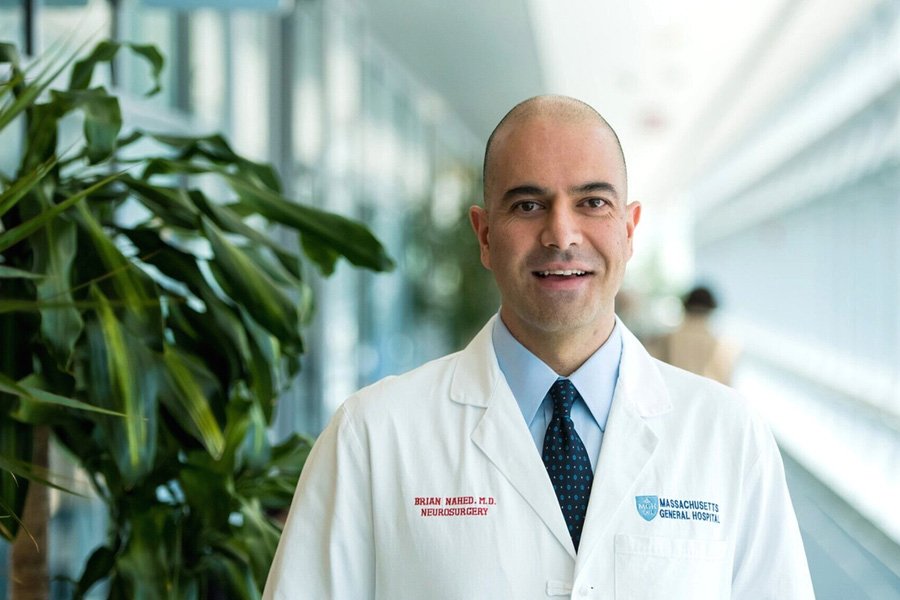
Brian Nahed works in a field that leaves no room for wandering attention. Neurosurgery is built on detail so fine it can feel almost microscopic, yet the consequences are immense. A single decision can affect speech, movement, memory, or the ability to live independently. In that environment, precision is not a slogan. It is the floor beneath every step. Brian Nahed’s professional identity rests in this world of exacting judgment, where the brain must be approached with both courage and restraint.
What makes his work stand out is not simply the difficulty of the field, but the way modern neurosurgery has changed under the hands of physicians like him. The operating room is no longer just a place for cutting and removing. It is a place for mapping, measuring, and listening. A surgeon has to think like an engineer, a scientist, and a careful translator of human function. Brian Nahed’s career reflects that shift. His work belongs to a generation of physicians trying to make surgery less blunt and more intelligent, like replacing a hammer with a violinist’s hand.
A Doctor Shaped by Academic Medicine
Brian Nahed’s professional life is closely tied to academic medicine, where patient care, training, and research share the same table. That setting matters. It means his work is not confined to one operating room or one clinic. It expands into teaching, planning, mentoring, and building systems that outlast a single case. In that environment, a physician is not only a healer but also a custodian of methods, passing knowledge forward like a relay baton that cannot be dropped.
Academic medical centers often move at two speeds at once. One is immediate, because patients need care now. The other is slow, because research takes time and institutional change takes even longer. Brian Nahed’s presence in that world suggests comfort with both tempos. He appears to have built a career not around quick applause, but around durable results. That kind of work is less visible than spectacle, but far more lasting. It is the difference between a firework and a lighthouse.
His public profile also reflects the growing importance of subspecialization in medicine. Brain tumor care, surgical mapping, and advanced operative planning require a deep and narrow expertise. This is not general practice in the broad sense. It is medicine at the edge of complexity, where a surgeon studies the landscape of disease with the patience of a cartographer drawing a coastline that keeps changing.
The Human Side Behind the Operating Room
Brian Nahed’s story is often discussed through the lens of family, and for good reason. Public interest in his life has been shaped not only by his medical career but also by his marriage into a prominent family. That connection has placed him in a rare position, one where a private medical life touches a highly public political and civic sphere. Yet that visibility does not define the whole picture. It only adds another layer to it.
There is something striking about a life that balances hospital corridors with family dinners, surgical schedules with school calendars, and professional responsibility with personal loyalty. Those worlds can feel like different weather systems, but they still move through the same life. Brian Nahed’s public image suggests that he has lived with that tension for years. His identity is not reduced by it. Instead, it becomes more textured, more rooted, more difficult to flatten into a single label.
Family in this context is not just biography. It is structure. It gives the public a way to understand where a person comes from and how their values might have been formed. For Brian Nahed, that means the story stretches across medicine, marriage, children, and the influence of a medical household. It is the kind of background that can produce a steady hand, an ear trained to listen, and a habit of taking responsibility without theatrics.
Research That Looks for Signals Beneath the Surface
A modern neurosurgeon often works at the meeting point of surgery and discovery. Brian Nahed’s research interests fit that pattern. His professional reputation includes work on brain tumors and techniques designed to improve both safety and effectiveness. But beyond the operating room, his name is linked to efforts that seek information in new places, especially in blood based approaches that may help reveal disease in less invasive ways.
That kind of research has a quiet elegance to it. It asks whether the body can be read as a set of clues rather than only a battlefield. Instead of waiting for a disease to announce itself loudly, researchers try to detect faint signals early, when options may be broader and outcomes better. The idea resembles listening for a distant bell through fog. That is the spirit behind much of contemporary oncology research, and Brian Nahed’s work sits inside that current.
This blend of surgery and investigation matters because the best clinicians often know that tomorrow’s treatment begins with today’s questions. The operating room solves immediate problems, but research pushes the boundaries of what those solutions can become. Brian Nahed’s career reflects that double vision. He is not only treating disease as it exists now. He is also helping shape the tools that may define how it is treated later.
Teaching the Next Generation of Surgeons
A medical leader is measured not only by what they do themselves, but by what they help others do. Brian Nahed’s roles in education and leadership suggest that he has extended his influence into training environments where young physicians learn how to think under pressure. That is an underrated form of power. The best teachers in medicine do not just share facts. They shape judgment, tone, and habits of mind.
Training neurosurgeons is a high stakes endeavor. The field demands patience, memory, dexterity, humility, and the ability to stay calm when the room is not. Leaders in that space have to model more than technical excellence. They have to model discipline. They have to show how to absorb complexity without becoming paralyzed by it. Brian Nahed’s public work in training and leadership suggests a commitment to that kind of mentorship.
There is also an institutional dimension to this. Strong educators help shape department culture, residency structure, and the long term tone of a medical program. In that sense, Brian Nahed’s impact is likely wider than any one patient list can show. A surgical department is a living machine, and leadership is what keeps its gears aligned. Without it, even brilliance can splinter.
Why His Story Resonates Beyond Medicine
Part of what draws attention to Brian Nahed is that his life sits at the crossroads of elite medicine and public family history. That combination creates a rare kind of visibility. He is not a celebrity in the usual sense, nor a public official. He occupies a more unusual space, one where professional seriousness meets public curiosity. That makes his story feel both grounded and distinctive.
People are often fascinated by figures who carry multiple identities at once. Surgeon. Teacher. Researcher. Husband. Father. Son of a medical family. Member by marriage of a well known political family. Each role changes the outline a little. Together they create a portrait with depth. Not a mask, not a logo, but a living person moving through several worlds at once.
The enduring appeal of Brian Nahed’s story may be that it resists easy simplification. It is not built on flash. It is built on repetition, discipline, and trust. In medicine, those qualities matter more than drama. In family life, they matter just as much. And in a public culture that often rewards noise, a life shaped by precision can feel almost radical.
Keeping Household Finances Afloat During Probate
Your First Virtual Doctor Visit Without The Digital Drama
Making Westfield Cleanup Less Chaotic With The Right Dumpster