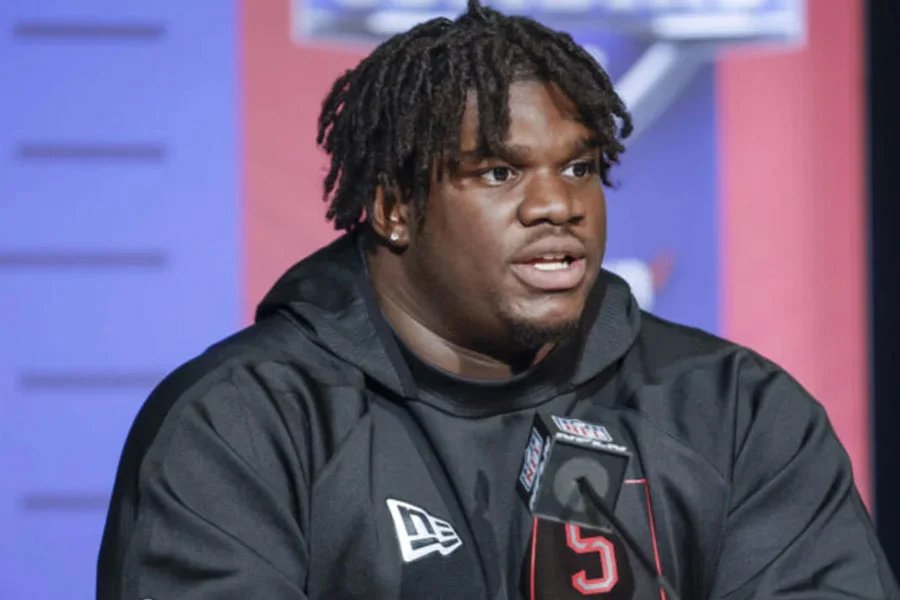
A surname that opens doors and raises the bar
I keep coming back to how some stories arrive with a spotlight already switched on. Michael Dean Tomlin lives inside that kind of story, but the more interesting part is not the glare. It is what he does inside it. He is not just the son of a well known NFL coach. He is a young man whose path has been shaped by speed, restraint, and a steady refusal to let one label become the whole map.
That matters because easy narratives are lazy. They flatten people into headlines, and Michael Dean Tomlin does not fit neatly inside one. He has moved through football, academics, family expectation, and private ambition like someone walking a narrow bridge over deep water. Every step has to be deliberate. There is no room for drift.
Growing up where discipline had a daily address
I think people sometimes imagine famous families as loud places, full of spectacle and constant performance. This one seems more layered than that. Michael Dean Tomlin grew up around structure, privacy, and high standards. In a home like that, discipline is not a motivational poster. It is the air in the room.
Being raised in Pittsburgh while your father leads the city’s most visible football franchise creates a strange kind of gravity. Everything pulls toward the game, yet the family story is larger than football alone. Education, character, and self control appear to have been part of the same conversation as touchdowns and tackles. That combination gives Michael Dean Tomlin a foundation that feels less like a launch pad and more like a forge.
What interests me most is how family legacy can be both a gift and a test. It can carry you, but it can also shadow you. A person in that position must decide whether to inherit a script or write a new one. Michael Dean Tomlin seems to have chosen the second path, even while carrying the first name of a father whose reputation already fills a stadium.
Speed was never just speed
At first glance, the athletic profile looks straightforward. Wide receiver. Track talent. Lean build. Quick feet. But those words do not capture the texture. Speed on its own is only a flash. The real skill is knowing how to aim it.
Michael Dean Tomlin’s high school years hinted at that sharper truth. He was not simply fast in the open field. He understood timing, leverage, and rhythm. That is the difference between a sprinter and a receiver who can turn a half step into daylight. I see that as a kind of chess move made at full speed. His route tree, his bursts, and his track background all point to an athlete who learned how to turn movement into meaning.
The 300 meter hurdles background is especially telling to me. That event is a miniature version of life itself. You run hard, you clear obstacles, you keep your form when fatigue starts whispering in your ear. It rewards rhythm more than panic. It rewards balance more than brute force. Those traits show up in football too, especially in a receiver who has to win with timing and feel rather than with sheer size.
College football as a patient apprenticeship
I respect players whose college careers are built like a staircase instead of a ladder. That is what stands out here. Michael Dean Tomlin did not storm into prominence and stay there as if the field had been waiting for him. He grew into his role.
At Maryland, he learned the slow language of college football. The margins are thin there. A player can be talented and still spend long stretches proving he belongs in live action. Then came Boston College, where the next chapter gave him a broader canvas. College football often treats development like a hidden room in the house. Fans see the box score. Coaches see the daily reps, the details in practice, the willingness to block, the willingness to learn, the willingness to keep showing up when the game does not immediately reward you.
That is why his final college profile feels more interesting than flashy stat padding ever could. A receiver can finish with modest numbers and still have a meaningful career arc if he matures in the right ways. Michael Dean Tomlin appears to have done that. He gained experience, earned trust, and carried himself as someone who understood that football often pays the patient first.
The academic side matters too. A player who completes graduate studies and earns an academic honor is showing a different kind of competitiveness. I do not mean the kind measured by stopwatch splits. I mean the discipline to keep building when no crowd is watching. That says something important about his wiring.
The pro transition and the value of another chance
I have always thought the move from college to the professional game is like stepping from a familiar shoreline onto a shifting bridge. A player can be promising and still need the right break. The margin between opportunity and obscurity can be a single practice, a single tryout, a single clean rep.
Michael Dean Tomlin entered the pro conversation through the door that many undrafted players know well. It is a narrow door, but it is not locked. Pro days, minicamp invitations, and preseason opportunities are the proving grounds where traits have to become habits. This is where a player stops being an idea and starts being a decision for a coaching staff.
What stands out to me is that his profile gives evaluators something concrete to work with. He has speed. He has a track background. He has route experience. He has special teams value. He has a body type that can be shaped for different roles. That combination is not a finished product, but it is a real one. In football, real is often enough to keep the next door from closing.
I also think the pro transition reveals something about identity. Some athletes arrive with a roar. Others arrive with a murmur that grows louder with each rep. Michael Dean Tomlin feels closer to the second type. He does not need to be the loudest player in the room to matter. Sometimes the quietest engines carry the farthest.
A public life that still keeps its distance
There is also an interesting tension in the way Michael Dean Tomlin seems to carry himself publicly. He is visible because of family, but not consumed by visibility. That balance is rare now. So many young athletes are pushed toward constant self display, as if every moment must be packaged into a highlight reel. His presence seems more measured. Less broadcast tower, more backstage light.
That restraint can be a strength. It leaves room for actual growth. It allows an athlete to keep some part of himself unperformed. I think that matters because a life built entirely for the audience can crack under pressure. A life with private roots can bend and recover.
The fashion interest adds another layer. It tells me there is a broader aesthetic intelligence at work here, a sense that presentation and identity are connected. That does not mean he is trying to become a celebrity first and a player second. It means he understands that style can be another language. Some people speak it loudly. He seems to speak it with more control.
Family legacy as pressure and propellant
When a person comes from a prominent family, everyone wants a simple answer. Is the legacy helpful? Is it unfair? Does it open doors or weigh them down? I think the honest answer is that it does both.
For Michael Dean Tomlin, the family name can act like a tailwind. It also makes every step more visible. A routine moment can become a public discussion. A tryout can feel like a referendum. A quiet offseason can become a story. That is a lot for one person to carry.
And yet I see a deeper advantage too. He grew up near a model of professional consistency. He saw what long term preparation looks like. He saw how leadership works when it lasts beyond a single season. That kind of exposure can shape a young athlete’s sense of time. It teaches that careers are built in layers, like sediment, not fireworks.
That is the part of his story I find most compelling. He is not only navigating expectation. He is learning how to turn expectation into fuel.
FAQ
Who is Michael Dean Tomlin?
Michael Dean Tomlin is a former college wide receiver whose story combines football, academics, family legacy, and personal discipline. He is known for his athletic background, his academic accomplishments, and his connection to one of the most recognizable families in American football.
What makes his path different from a typical college football story?
His path stands out because it blends patient development with strong family visibility. He did not arrive as a headline chaser. He built value through incremental progress, special teams work, and steady growth across multiple seasons.
Why does his high school background matter?
His high school years matter because they reveal the raw ingredients that shaped him. Track speed, football instincts, leadership, and competitive composure all showed up early. Those traits helped form the athlete he became later.
What role did academics play in his profile?
Academics were clearly important. Michael Dean Tomlin completed graduate studies and earned academic recognition, which suggests a serious commitment to life beyond the field. That kind of balance is rare and meaningful.
How does family shape his public image?
Family shapes it in a big way, but not in a simple way. His name draws attention, yet it also raises expectations. That creates pressure, but it also gives him a model of discipline, preparation, and resilience to draw from every day.
What is the most interesting part of his story?
For me, it is the contrast between visibility and quiet work. Michael Dean Tomlin has a famous surname, but his path seems built on steady effort rather than noise. That makes his story feel less like a spotlight and more like a slow burning flame.