A Family Story Built Across Distance
I find Kobi Witz interesting precisely because so little is pinned to him. In an age that rewards visibility, he stands at the edge of the frame, visible for a second and then gone again. His name belongs to a family story that moves between Israel and the United States, between private life and public memory, between the ordinary pull of kinship and the spotlight that follows a famous brother.
That kind of story is not rare, but it is often overlooked. Families are rarely neat lines on a chart. They are more like root systems under stone, spreading far beyond what anyone sees above ground. Kobi Witz comes into focus through that hidden structure. He is part of a family divided by migration and time, a family shaped by war, survival, remarriage, and the long afterlife of separation. The public may know the surname because of Gene Simmons, but the deeper meaning of the name lies in the quieter branches.
I think that is what makes Kobi Witz more than a footnote. He represents the part of family history that does not chase attention, yet still matters because it holds the shape of the whole.
Why a Single Reunion Became the Story
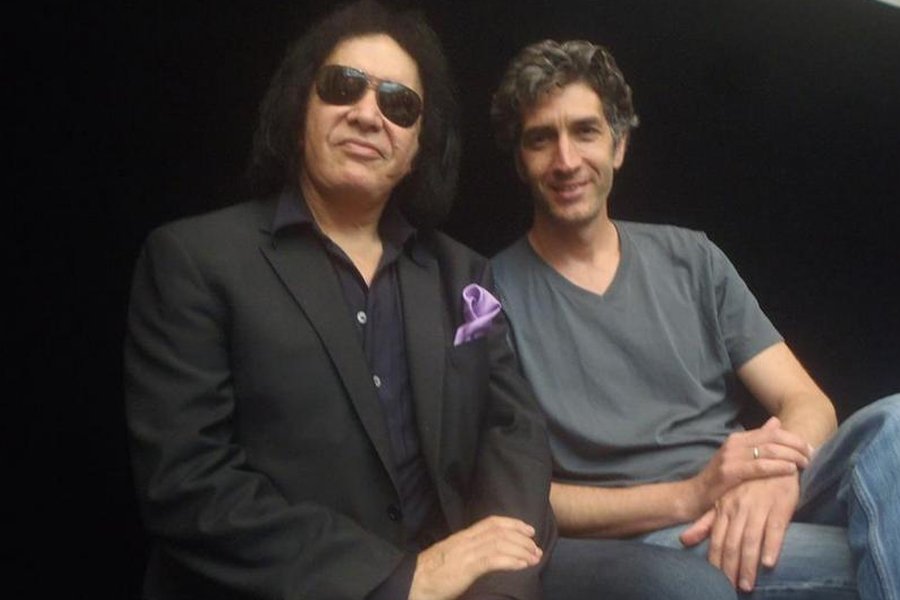
Public attention often works like lightning. It strikes one place, burns bright, and leaves the landscape changed. For Kobi Witz, that moment came during Gene Simmons’ 2011 visit to Israel. The reunion with paternal relatives gave the public a rare glimpse into a family that had been split across continents for decades. For a brief time, private names entered mainstream conversation.
That kind of visibility can be deceptive. It looks complete from the outside, but it is really just a doorway. A reunion scene tells us that people have gathered, hugged, spoken, and remembered. It does not tell us what kind of lives they built before the cameras arrived or after the crew left. Kobi Witz appears inside that doorway, not as a performer or public personality, but as a family member whose existence became legible to strangers through one carefully framed event.
I keep coming back to how unusual that is. Most people are never introduced to the world through a family reunion episode. Most names remain local, known only to relatives, neighbors, or the paper trail of genealogy. Kobi Witz occupies that thin border where private life brushes against celebrity history.
Israel as More Than a Location
Israel is not just an associated place in this story. It is the ground where the family roots stayed behind while one branch crossed the ocean. That matters. Geography can harden into destiny when family members grow up on opposite sides of a map. The result is not only distance but different versions of memory. One household keeps daily life. Another carries the memory of absence.
Kobi Witz belongs to the side of the family that remained in Israel, which gives his story a particular texture. He is part of a local continuity that existed even while Gene Simmons became an international figure. That contrast gives the family narrative a strong emotional voltage. One brother left and became famous. Another stayed. One life became highly documented. Another remained largely hidden.
I think the quiet power of Kobi Witz lies in that contrast. He reminds me that history is not only made by the people who travel farthest or speak loudest. Sometimes it is held by the people who stay, who maintain the family line, who live the unpublicized years.
The Public Record and the Missing Years
There is a strange honesty in the fact that so little is publicly documented about Kobi Witz. The absence of a career profile, public social media footprint, or widely reported personal details does not feel like a blank page to me. It feels like a locked room. The room exists. We can infer its shape. We just cannot walk inside.
That difference matters. In celebrity culture, people often confuse visibility with significance. But a thin public record can tell us something important too. It can tell us that a person has not turned a private life into a brand. It can tell us that a family name can live in the world without becoming content. It can tell us that not every life wants a spotlight.
Kobi Witz sits in that category. He is known publicly through family relation, not self-promotion. That makes his presence feel almost architectural. He supports a larger narrative without demanding center stage. I find that oddly dignified. The world is full of people who matter deeply to the people around them and never become internet objects, headlines, or social media identities.
Family as a Living Archive
The Witz family story also shows how family can act like an archive that never stops expanding. Names appear in one document, then another, then in a reunion scene, then in a television episode, then in a genealogy entry copied and recopied by strangers. Each appearance adds a layer, but none of them fully captures a person.
Kobi Witz is part of that archive. So are the siblings associated with him. So is the father at the center of the line. So is the split between the child who left and the children who stayed. Together they form a history that is less like a biography and more like a mosaic. One tile alone means little. The pattern appears only when several pieces are set side by side.
I am drawn to this because it reflects how families actually function. We rarely know everything. We know fragments. We know stories told at the table, records filed somewhere official, old photographs with the corners worn down. We know who came, who left, who returned, who was remembered. Kobi Witz belongs to that kind of memory, where a name can survive even when a full public life never takes shape.
Fame by Association and the Shadow It Casts
There is also the complicated fact that a famous sibling can cast a very long shadow. Gene Simmons became a global figure, and that fame naturally pulled attention toward the family behind him. But fame by association is not the same as fame itself. It often turns relatives into supporting characters in someone else’s biography.
Kobi Witz appears in that shadow. Yet I do not think the shadow erases him. It simply changes the angle of view. Instead of seeing a man through the lens of career, audience, or public persona, I see him through relationship, ancestry, and reunion. That is a different kind of visibility, one that asks for more humility from the viewer.
I also think there is value in resisting the urge to overfill the gaps. Not every relative of a celebrity needs to be explained into a public identity. Sometimes the most honest thing is to say that the record stops here. The story is not empty. It is partial.
Why Kobi Witz Still Resonates
Kobi Witz matters because he represents a broader human truth: a person can be real, connected, and important without becoming widely documented. His name carries the weight of family history, migration, and reunion. It also carries the silence of years not captured by cameras or interviews. That silence is not failure. It is privacy doing its ordinary work.
I think people respond to stories like this because they recognize themselves in them. Most families contain one branch that left, one that stayed, one that became public, one that remained local. Most families contain unresolved distance. The Witz family is simply more visible than most because one member became famous enough to bring the rest into view, briefly and imperfectly.
Kobi Witz remains part of that larger human pattern. His story is not a ladder to celebrity. It is a trace, a thread, a surname that keeps pulling back to the same knot of memory and kinship.
FAQ
Who is Kobi Witz?
Kobi Witz is a member of the Witz family best known publicly as a paternal half-brother of Gene Simmons. His name appears mainly in connection with family history and reunion coverage.
Why does Kobi Witz attract attention?
He attracts attention because he is linked to Gene Simmons, but also because he represents the less visible side of a family split between different countries and different public lives.
What is publicly known about Kobi Witz’s career?
There is no widely documented public career profile for Kobi Witz. The available public image focuses on family relation rather than professional work.
Does Kobi Witz have a public social media presence?
There is no clearly verified public social media presence that is widely attributable to him.
Why is the 2011 reunion important?
The 2011 reunion is important because it was the main moment when Kobi Witz entered broader public awareness. It connected a private family relationship to a widely recognized public figure.
What does Kobi Witz represent in the larger family story?
He represents continuity, privacy, and the part of family history that survives outside fame. His presence helps show how a family can remain whole even when its public visibility is fragmented.